
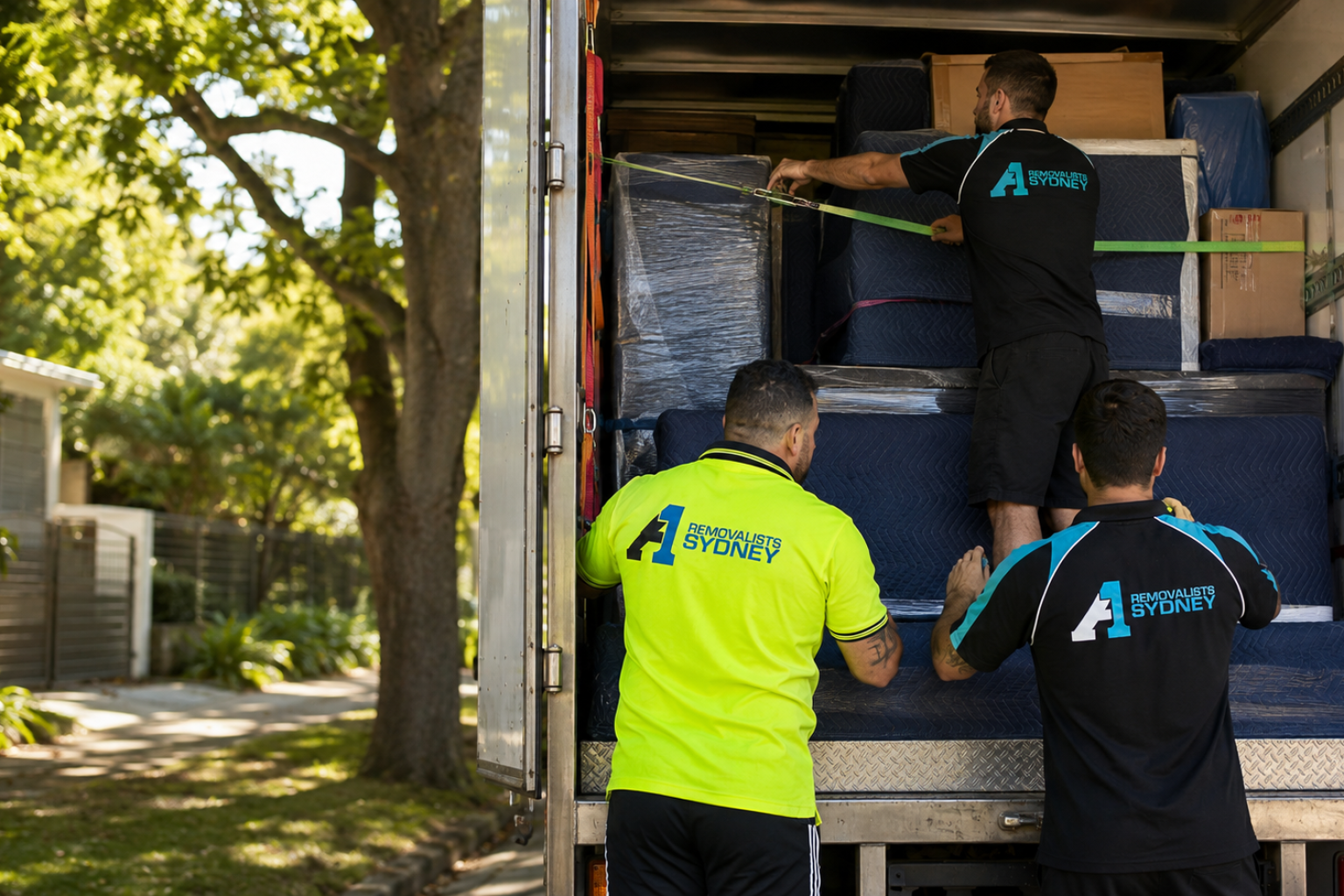
Moving day damage often starts well before the truck leaves the driveway. A carton tips into a table leg, a fridge shifts on a corner, or a polished timber setting rubs against bare metal for an hour on the M4. Knowing how to load a moving truck efficiently and properly is what stops those problems before they begin.
For households and businesses across Sydney, NSW, the way a truck is packed can efficiently affect everything from breakages and scuffs to how safely the vehicle handles on the road. Whether you are moving from a terrace in Newtown, an apartment in Parramatta, or a family home in the Hills District, the same principle applies: load with structure, not speed, especially when opting for a truck rental service.
Why proper moving truck loading matters for Sydney moves
A moving truck is not just a large empty box. Once it is in motion, every item inside responds to braking, turning, road vibration, and changes in gradient. Sydney roads add their own challenges. Tight inner-city streets, steep driveways in the North Shore, traffic around the CBD, and longer suburban runs through Western Sydney all put pressure on the load.
That is why experienced removalists Sydney focus on more than lifting and carrying. They plan how weight is spread, how rows are built, and how furniture is protected from friction and impact. Done properly, loading helps with three things at once: safer transport, better use of truck space, and easier unloading at the other end.
This matters just as much for office relocations as it does for home moves. Desks, monitors, filing cabinets, and boxed records need a stable load plan, especially when a business is moving after hours and wants to get back up and running quickly.
Preparing boxes and furniture before loading a moving truck
Before the first item goes near the truck, consider some moving tips to ensure there is order on the ground. Packing and staging are part of loading. If boxes are not labelled, furniture is not wrapped, or loose items are still inside drawers, the truck will become harder to organise and far more likely to suffer damage in transit.
A good approach is to group everything by weight, fragility, and destination room. Heavy cartons should be together. Fragile kitchen boxes should be separate. Bedding, linen, and cushions should be easy to reach because they are useful as protective fillers inside the truck. Small valuables, personal documents, jewellery, and medication are better kept with you rather than placed in the cargo area.
A1 Removalists Sydney often assists customers with packing services before loading begins, which can make a major difference. Proper cartons, packing paper, bubble wrap, moving blankets, shrink wrap, trolleys, and straps are not extras. They are the tools that help prevent avoidable damage.
After the items are staged, it helps to check off the basics, including moving straps for added security:
- Moving blankets
- Ratchet straps
- Shrink wrap
- Reinforced boxes
- Trolley or dolly
- Mattress bags
- Corner protectors
- Labels and marker
If you are using storage as part of the move, label even more clearly than usual. Short-term storage between properties is common in Sydney, especially when settlement dates and lease dates do not match. Clear labels make loading, unloading, and later retrieval far easier.
Best order to load a moving truck for stability
The safest load starts at the front wall of the truck and builds backwards. Heavy items go in first, and they go on the floor. That creates the base. Lighter boxes, soft goods, and fragile items should never become the foundation for bulky furniture.
Think of the truck as a series of firm sections rather than one large pile. Professional Sydney removalists often build one row at a time, secure it, then continue. That keeps the load tight and reduces movement during transport.
A practical sequence for how to load a moving truck looks like this:
- Front section: appliances, solid timber furniture, heavy book boxes, tool chests
- Wall support: mattresses, bed bases, and long flat items placed upright where suitable
- Middle rows: medium-weight cartons, dining chairs, side tables, office items
- Upper and protected spaces: lighter cartons, lampshades, linen, soft bags
- Rear access area: items needed first on arrival, including essentials boxes or floor rugs
Large furniture should be prepared before it goes in. Bed frames may need dismantling. Dining tables often travel better with legs removed. Drawers should be emptied if the unit is heavy, then wrapped shut. Furniture removalists Sydney regularly take this step because it protects both the item and the people handling it.
It is also worth resisting the temptation to “just fit one more thing on top”. Overstacking is one of the quickest ways to turn a stable load into a shifting one.
Weight distribution and tie-down methods for safe transport
Weight should be balanced from left to right across the truck floor. If the dense items are all loaded on one side, the truck can lean, stacks can press sideways, and the drive becomes less predictable. On long suburban routes or interstate removals, poor balance becomes an even bigger issue because the load is under pressure for longer.
Heavy items belong low. The centre of gravity stays lower, and the truck is easier to manage. Every completed section should then be efficiently secured with moving straps attached to proper tie rails or anchor points to ensure the load is efficiently organized. Blankets stop scratching. Straps stop movement. You need both.
The table below shows a simple loading guide that works well for most residential and office moves.
| Item type | Best position in truck | Why it works |
|---|---|---|
| Fridge, washer, dryer | Front of truck, upright, strapped | Creates a stable base and reduces tipping |
| Sofa, dresser, buffet | Low on floor, wrapped, close to heavy items | Strong structural support for rows |
| Mattress and bed base | Upright against wall, protected | Saves space and cushions nearby items |
| Heavy cartons | On floor, spread evenly | Keeps weight low and balanced |
| Fragile cartons | On top of solid rows, never underneath | Reduces crushing risk |
| Mirrors, artwork, TVs | Upright in protected gaps, padded | Less pressure and less flexing |
| Linen, cushions, soft bags | Fill voids between secure items | Limits movement and rubbing |
If the truck stops suddenly on Parramatta Road or takes a long sweeping turn on the M7, an unsecured load will shift. That is why local removalists use straps throughout the truck, not just at the rear.
Protecting furniture, fragile items and appliances in transit
Furniture damage is often caused by rubbing rather than dropping, especially in truck rental situations where packing can be tight, so having some moving tips can be invaluable. Timber pieces can lose their finish when they sit against rough surfaces. Table corners can chip when left exposed. Leather can mark easily if packed too tightly against unprotected edges. Wrapping furniture before loading is a core part of safe transport, not a finishing touch.
Appliances need their own care. Many should travel upright, with enough support to stop swaying. Doors should be taped or wrapped shut, and cords should be secured. Electronics should be packed in suitable cartons where possible, with padding that limits internal movement. For office relocations, monitors and IT equipment benefit from clear labelling and careful stacking order.
A1 Removalists Sydney handles a wide range of home removals, office moves, furniture transport, and interstate removals, so this protective stage is often built into the service. That may include wrapping, padding, dismantling furniture, and reassembly at the new address.
A few practical rules make a big difference:
- Timber furniture: cover contact points with blankets and keep polished surfaces from rubbing together
- Glass, mirrors, and fragile items: use corner protection, upright placement, and no heavy boxes on top
- Appliances: keep upright where required and strap them to the truck’s tie rails
- Electronics: pack in fitted cartons, secure cords, and keep them away from pressure points
- Drawers and doors: shrink-wrap or tape them closed before lifting
- Soft goods: use them to fill gaps, not as support for heavy items
Fragile pieces should not be left floating in open space. They need a snug, protected position between stable items, with padding to absorb vibration.
Sydney weather, apartment access and interstate removals
Loading advice changes slightly with the conditions on the day. In Sydney, sudden rain can turn cardboard weak in minutes. Summer heat can affect electronics, candles, artwork, and some finishes. Wind can make mattress bags and wrapping harder to manage in open driveways or loading zones.
Wet weather moves need to be handled efficiently, with faster transfers from the property to the truck, plus plastic protection for mattresses, lounges, and cartons that cannot get damp. If there is a delay between homes, storage solutions become useful. A secure storage option can take pressure off the schedule and stop a rushed loading job.
Access matters too. Apartment moves in Zetland, Mascot, or Chatswood often involve lifts, loading docks, and strict booking windows. Terrace moves in the Inner West may have narrow staircases and very limited parking. In those settings, the truck has to be loaded in a way that matches the unloading conditions. Items needed first should be accessible. Bulky furniture should not trap the essentials at the front.
Interstate removalists also think ahead because the load stays in transit for much longer. A move from Sydney to Brisbane, Melbourne, or regional NSW needs tighter restraint, more careful void filling, and extra attention to weather changes along the route.
Choosing removalists Sydney for loading, packing and storage support
Many people can pack a truck loosely. Fewer can pack it well. That is where professional removalists Sydney can save time, reduce risk, and help avoid repair or replacement costs later. The value is not only in muscle. It is in planning, handling, and knowing how different items behave in transit.
A1 Removalists Sydney provides local moving services across Sydney and surrounding suburbs, with support for home removals, office relocations, packing and unpacking, furniture removals, storage, truck rental, and interstate moves. With trained movers, equipped trucks, trolleys, blankets, shrink wrap, moving straps, and careful handling methods, the aim is to keep the load stable and the process organised from pickup to delivery.
There are times when hiring Sydney removalists is especially sensible:
- Multi-storey apartment moves
- Large family homes
- Antique or delicate furniture
- Office relocations with IT equipment
- Moves involving storage
- Long-distance or interstate removals
If you are comparing furniture removalists Sydney, ask practical questions. How will heavy items be secured? What protection is used for timber, glass, and upholstery? Is packing available if you are short on time? Can storage be arranged if settlement dates shift? Clear answers usually reflect a well-run operation.
Good truck loading, including knowing how to load a moving truck properly, load efficiently, and apply moving tips, is a mix of preparation, sequence, balance, and restraint. When each part is handled properly, the drive is safer, the unloading is smoother, and your furniture has a far better chance of arriving in the same condition it left. For Sydney households and businesses planning a move, that is often the difference between a rushed day and a well-managed one.


