
Moving house looks simple when it’s reduced to “just load a truck and go”. Then reality arrives: stairs, awkward corners, a lounge that suddenly weighs a tonne, and a timetable that doesn’t care about your back or your roster.
Choosing between a DIY move and hiring removalists is less about toughness and more about trade-offs. Money matters, yes, yet time, risk, access, and accountability can swing the decision faster than most people expect.
The real question: what are you trying to optimise?
Some moves are mainly about keeping cash in your pocket. Others are about protecting a tight settlement date, avoiding damage in a rental, or getting a business back online quickly.
A good decision starts by being clear on your “non-negotiables”: is it cost certainty, speed, safety, or keeping your weekend intact?
DIY moving costs: what you see, and what you only notice later
DIY looks cheap because the headline cost is usually just the vehicle hire. In Australia, a small to mid-size moving truck or van is often around $90 to $200 per day, and that can feel manageable.
Then the line items start multiplying: fuel, tolls, bond cleaning, extra packing supplies, equipment hire, and sometimes the awkward expense of bribing friends with pizza that no one has time to eat.
A DIY budget tends to miss costs that show up as “small” amounts, then stack into a large total by Sunday night.
- Truck or ute hire
- Fuel and tolls
- Boxes, tape, bubble wrap
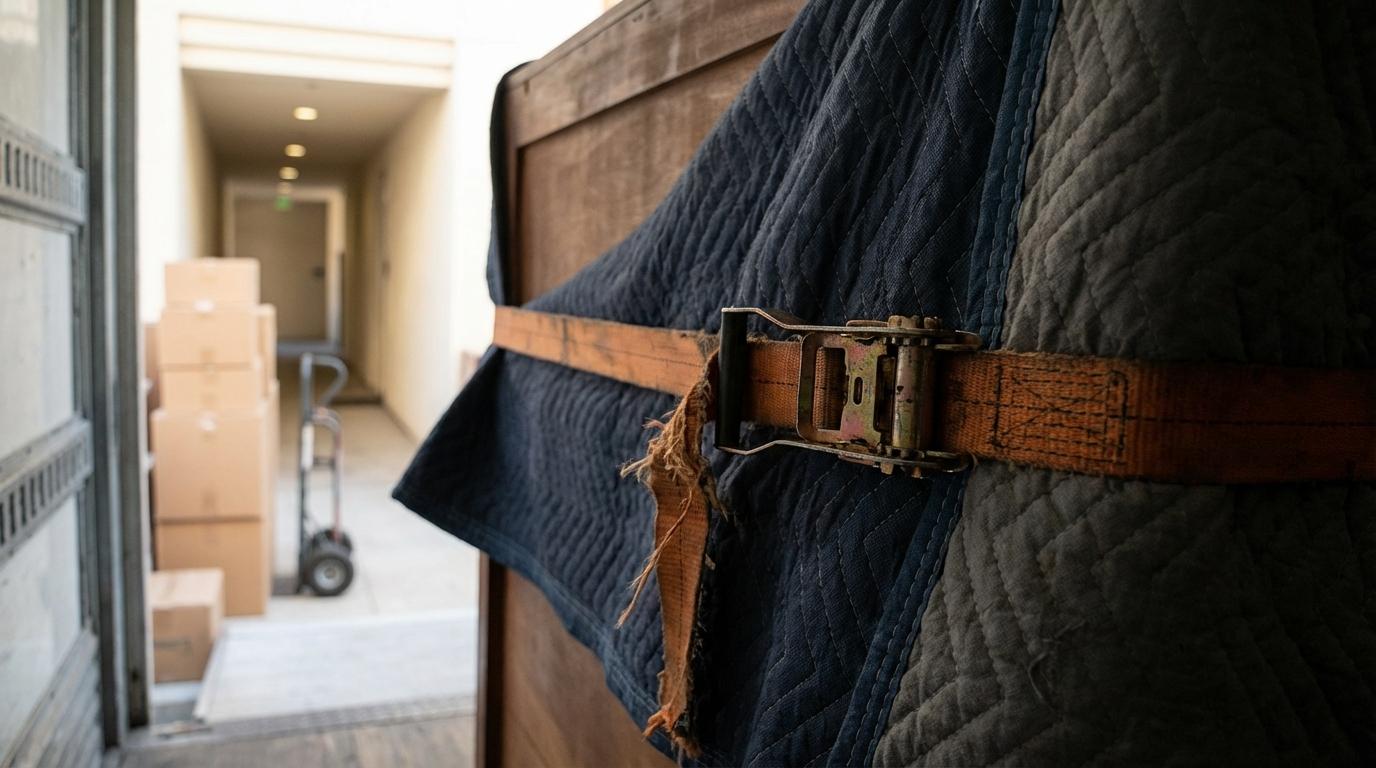
- Dollies, straps, blankets
- Parking or loading fines
- Extra trips (wrong truck size)
- Time off work
The other DIY cost is the one you rarely put in a spreadsheet: the value of your time. Australian surveys put the overall moving process (planning, packing, cleaning, moving day, loose ends) at dozens of hours, sometimes pushing towards 80+ hours all in. Even if your move-day is one Saturday, the admin and preparation can chew through nights and annual leave.
Hiring removalists: what you’re paying for beyond a truck
Removalists can look expensive because you see a single figure that bundles labour, vehicle, equipment, and operational overheads. Typical pricing varies by home size, access, distance, and service level. Hourly rates can range widely, and total local move costs often sit anywhere from a few hundred dollars for a small job to a few thousand for a larger home. Interstate relocations push higher again.
That said, the quote is paying for more than muscle. You’re buying a system: trained handling, proper loading methods, protective materials, and a crew that can keep momentum when the lift booking is late or the stairwell is tighter than expected.
A professional team also brings the right gear from the start, not halfway through after a trip to the hire shop.
- Labour and supervision: a crew that lifts, carries, stacks, and keeps the job moving
- Vehicle and equipment: truck size matched to the load, plus trolleys, blankets, straps, ramps, tail lifts (where needed)
- Protection and handling: wrapping, padding, and techniques that reduce knocks to walls, floors, and furniture
- Accountability: clearer processes if something goes wrong, plus insurance options depending on the provider and level of cover
Companies like A1 Removalists Sydney position this as a practical, end-to-end service: residential and commercial moves, local and interstate, packing and wrapping help, dismantling and reassembly, plus a fleet that can scale from smaller trucks through to larger vehicles with tail lifts and pallet jacks for heavier jobs.
A realistic cost comparison (with the hidden bits left in)
The table below is not a quote and not a promise. It’s a way to compare categories so you can sanity-check your plan before you commit.
| Move scenario | DIY cost range (common items) | Removalists cost range (typical market) | Where the surprise usually sits |
|---|---|---|---|
| Studio or small 1-bed, same suburb | $250 to $700 | $300 to $900 | Extra trips, parking fines, lift access timing |
| 2-bed apartment, stairs or lift booking | $400 to $1,200 | $700 to $1,800 | Damage to walls/doors, slow loading, helper no-shows |
| 3-bed house, family furniture | $700 to $2,000 | $1,200 to $3,500 | Underestimating truck size, fatigue, injuries |
| Sydney to regional NSW or interstate | $1,500 to $4,000+ | $2,600 to $5,850+ | Fuel, overnight stays, schedule blow-outs, transit risk |
DIY ranges typically include vehicle hire, fuel, tolls, basic packing materials, and incidental equipment. Removalist ranges typically bundle truck and labour; packing services, stairs, long carries, specialty items, and higher insurance cover can add to the total.
Time is either your friend or your enemy
A DIY move rewards people with flexibility: you can spread packing over a week, run multiple trips, and keep costs low if nothing goes wrong.
It punishes anyone with deadlines.
One late key handover, one wet weekend, one mate who cancels, or one under-sized truck can turn “a simple Saturday” into a multi-day effort. Research in Australia has also linked moving with taking several workdays off across the whole process, not only moving day.
Professional crews compress the work. A common pattern for a standard home is that the load, drive, and unload can be completed in a single long day, with packing support added if you want even more time back.
A short move can still be a long day.
Risk and responsibility: who carries the downside?
Every move carries risk. The difference is who absorbs it when something cracks, scratches, or strains.
DIY puts most risk on you and your helpers. That includes injury risk from lifting heavy items, plus property damage risk in tight hallways and stairwells. It also includes vehicle risk: you’re driving a larger vehicle than usual, often under pressure, often while tired.
Removalists reduce risk through training, equipment, and repetition. They still can’t remove risk entirely, yet the probability and impact tend to shift when people who do this daily are handling the load.
- Sprains and strains
- Dropped items and broken legs on chairs
- Dented plaster, gouged timber floors
- Strapped loads that shift in transit
- Liability if someone gets hurt helping you
Insurance is the quiet decider here. DIY movers often assume their contents insurance automatically covers “in transit”. Sometimes it does, often it doesn’t, and policy detail matters. With removalists, you’ll usually see a mix of public liability, carriers’ liability, and optional transit cover depending on the company and the level you choose. It’s worth reading what’s included and what excess applies, then deciding what level of risk you’re willing to carry yourself.
When DIY moving makes strong sense
DIY is a smart choice when the move is genuinely small and simple, and you have control over timing. Think minimal furniture, good access, and a short drive. It can also make sense when you’re already living lean and can pack everything into a single van load without heroic lifting.
DIY also suits people who enjoy the process, have reliable help, and can tolerate a bit of disorder while they finish unpacking over a few days.
If you do go DIY, the best cost control is planning: measure bulky items, check the truck’s internal dimensions, book lift access in writing if you’re in an apartment, and confirm parking rules at both ends.
When hiring removalists is the calmer, often cheaper option
Removalists tend to win when complexity rises. Complexity can be weight, volume, access, distance, or a schedule you can’t bend.
Sydney is a good example of why access matters. Loading zones, clearways, narrow streets, high-rise lift bookings, and strata rules can turn a short distance into a long job. A team that moves around the city daily is more likely to anticipate these constraints and work with them.
Removalists also tend to be the better option when you have valuable or awkward items: large fridges, heavy cabinets, stone tops, fragile pieces, or anything that becomes dangerous when carried down stairs.
For commercial moves, the logic is even sharper. Lost time is lost revenue. Getting an office, retail space, or warehouse back to operational status quickly is often worth more than the gap between DIY and a professional crew.
A practical decision method: the three-number test
If you’re stuck between the two options, run this quick test with numbers that reflect your life, not someone else’s.
First, estimate your DIY out-of-pocket cost (truck, fuel, tolls, materials, equipment). Second, put a value on your time: even a modest hourly figure multiplied across packing, moving, cleaning, and recovery changes the comparison. Third, price the risk you can’t ignore: damage you’ll pay for, the chance of an injury, and the cost of delays if you miss a key handover.
When you add those three numbers, the “cheaper” option often becomes clearer.
If you’re leaning towards removalists, ask for an itemised quote and be upfront about access challenges. If you’re leaning DIY, treat it like a project plan, not a weekend errand. Either way, a well-planned move is a strong start in a new place, and it’s worth choosing the approach that protects your energy as well as your budget.


