
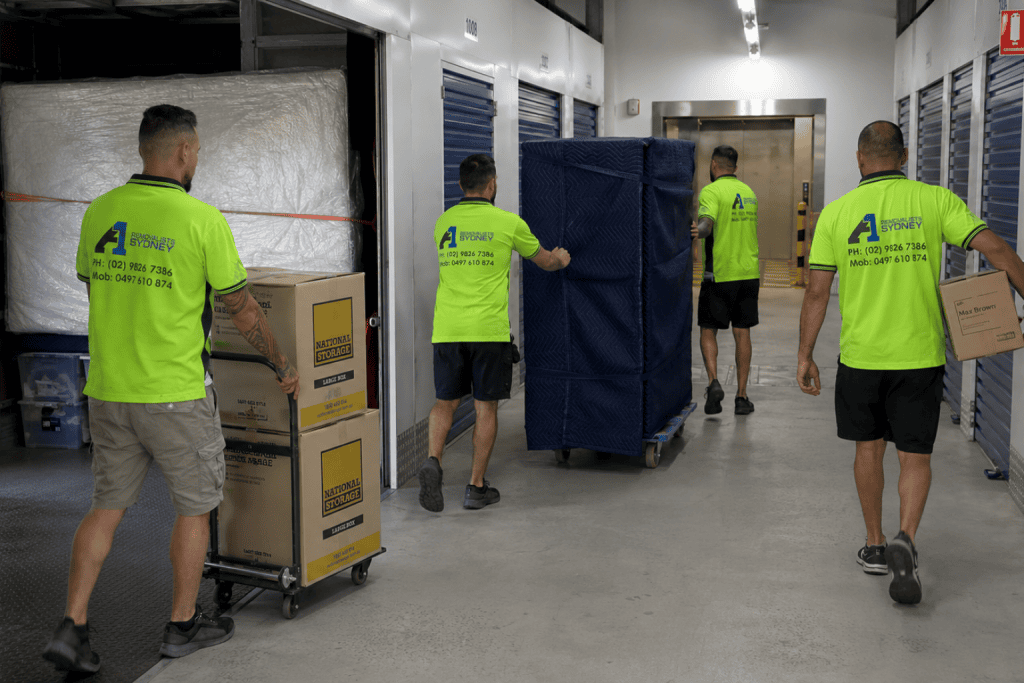
Moving a warehouse is rarely a single-day task, especially when stock still needs to move, orders still need to go out, and forklifts are still operating on site. For many Sydney businesses, a staged move with effective warehouse management solutions and supply chain planning is the most practical way to relocate without shutting the doors for a week.
This guide is written as an educational planning resource for professionals and businesses preparing a warehouse relocation in Sydney. Where A1 Removalists Sydney assists with these projects, the work is typically planned in phases so stock, shelving, equipment and operating areas can shift in a controlled order rather than all at once.
Why a staged warehouse relocation in Sydney makes sense
A staged warehouse relocation breaks the move into defined sections, facilitating a smoother transition from one site to another. Instead of emptying the whole site in one hit, you move selected stock lines, racking bays, machinery zones and dispatch areas in a sequence that keeps the business functioning.
That matters in busy industrial areas across Sydney, from Wetherill Park and Smithfield to Alexandria, Seven Hills, Bankstown and the outer west. Access windows, shared loading docks, truck movements and council parking conditions can all affect timing. A staged warehouse relocation gives you room to plan around those local constraints.
It also helps separate very different tasks. A pallet racking relocation is not the same job as moving loose cartons. A forklift warehouse move is not the same task as loading fragile stock onto a truck. When each activity is treated as its own controlled stage, safety and productivity are both easier to manage.
Initial warehouse inspection and inventory for warehouse relocation Sydney
The first step is a proper site inspection. Experienced commercial removalists Sydney businesses rely on a physical walkthrough to identify what is being moved, what is staying, what needs special handling, and what cannot be touched until other work is complete.
At this point, A1 Removalists Sydney would usually map the current warehouse layout and compare it with the destination site. That includes aisle widths, roller door access, dock height, forklift turning space, truck access, stair or lift access for offices or mezzanines, and any restrictions around loading zones.
The inventory stage should include a thorough audit and be practical, not vague. Stock should be counted by type and storage method, not just estimated as “a few pallets” or “some shelving”. The more accurate the inspection, the more reliable the labour plan, truck allocation and move schedule.
A strong and efficient inspection usually covers:
- pallet counts by aisle and bay
- loose stock and picking shelves
- Equipment: pallet jacks, wrapping stations, benches, cages and dock gear
- Access points: loading docks, roller doors, truck routes and forklift travel paths
- Special items: heavy machinery, oversized stock, sensitive equipment and archived materials
- Compliance items: dangerous goods areas, emergency access routes and exclusion zones
Measuring stock, equipment and pallet volumes before the move
Once the inspection is done, the next step is measurement. This is where many warehouse moves are won or lost.
Palletised stock needs to be counted and measured by pallet footprint, height, weight range and stacking limitations. Loose stock should be assessed by carton count, shelf metres or cubic volume. Equipment should be listed with dimensions, lifting method and whether it can travel loaded, empty, dismantled or upright.
This information feeds directly into truck selection, loading plans, and coordination of freight services. In Australia, loading plans are more than a nice idea. They help document how loads should be placed on a vehicle, how weight is distributed, and what restraint is needed for safe road transport. For a larger warehouse relocation Sydney project, that planning can include centre of gravity, dunnage, vehicle type and any segregation needs for dangerous goods.
It also helps answer practical questions early:
- Can the first truck take mixed pallets and loose stock, or should loads be separated?
- Do heavier pallets need to sit over a specific axle group?
- Is a tail lift suitable, or is dock loading required?
- Will delayed delivery stock need temporary storage between sites?
These details are where experienced Sydney removalists add real value. Good planning reduces double-handling and wasted truck space, which can keep pricing more competitive and the move easier to run.
Creating relocation zones and move stages for business continuity
After measurement comes sequencing. The warehouse is divided into zones and transportation plans are made, with each zone assigned to a move stage. This lets operations continue in the live sections while moved sections are being packed down, transported and re-established at the new site.
A common method is to separate the warehouse into receiving, reserve stock, picking, dispatch, office and equipment areas. Each area can then be relocated in an order that suits business priorities. Fast-moving stock may shift late, while slow-moving reserve stock can go earlier.
This is also where destination planning matters. Stock should not just be moved out. It should be moved into a designated location at the new site, with aisle, bay and floor positions already assigned.
Sample phased warehouse relocation plan
| Phase | Area moved | Key tasks | Operational impact |
|---|---|---|---|
| Stage 1 | Slow-moving reserve stock | Label pallets, load reserve inventory, place into new reserve bays | Minimal effect on daily dispatch |
| Stage 2 | Loose stock and secondary shelving | Pack shelves, move cartons, rebuild picking support areas | Some picking changes, manageable with temporary procedures |
| Stage 3 | Non-essential equipment and surplus furniture | Move benches, cages, archive items, spare equipment | Low disruption |
| Stage 4 | Main picking and dispatch stock | Transfer active SKUs, set new pick faces, verify barcode locations | Higher coordination needed, often after hours or on a weekend |
| Stage 5 | Final racking, machinery, admin area and handover | Complete racking work, move offices, clear site, final checks | Old site fully vacated |
A staged transition plan like this helps protect service levels and allows for a comprehensive audit of each stage to ensure compliance and efficient operation, often requiring collaboration among supply chain professionals to integrate warehouse management and identify the best moving solutions. It is often the best option when the warehouse cannot stop trading completely, especially when integrating freight services into the transition plan to ensure seamless logistics.
Labelling stock by aisle, bay and destination
Labelling is the discipline that keeps a warehouse move from turning into a stock hunt.
Each pallet, shelf run, carton group and major piece of equipment should be labelled with its current location and destination location. The simplest format is usually aisle, bay, level and zone. If the destination site uses a new layout, the labels need to reflect the future state, not the old one.
For example, a pallet may be marked as “Current: Aisle B, Bay 14, Level 2 / New: Zone 3, Aisle F, Bay 06”. That gives the removal team, forklift operator and receiving team the same reference point.
Loose stock also needs category controls. Fast picks, quarantine stock, returns, fragile items and customer-specific inventory should not be merged just because they share similar carton sizes.
Pallet racking relocation and moving stock safely
A pallet racking relocation needs its own plan. Racking should be assessed before dismantling so damaged components, missing beam locks or layout issues are identified early. The destination layout also needs to suit the stock profile and the material handling equipment being used. Aisle width, forklift turning circle and load limits all matter.
Pallet-racking dismantling or installation may require suitably trained contractors. Physical changes to uprights, beams or bracing should not be improvised on the day. If beam heights or layouts are being changed, that work should be supervised by a competent person, with load signage and bay details updated to match the installed system.
During stock movement, transportation of palletised and loose goods is usually handled differently. Palletised stock is faster to move but can create loading pressure if every team wants forklift access at once. Loose stock often needs bins, cages, cartons, shrink wrap and more hand labour.
A practical sequence often looks like this:
- Pallet stock: move full pallets first where destination bays are already installed and signed
- Loose stock: pack by pick path or category so re-shelving is faster at the new site
- Racking components: bundle, identify and transport separately from active stock where possible
- Critical items: leave live dispatch lines until the final move window
Forklift warehouse move logistics, trucks and load restraint
A warehouse relocation Sydney project usually involves multiple handling systems at the same time: forklifts, pallet jacks, trolleys, dock plates and trucks. That coordination cannot be left to ad hoc decisions on the floor.
Forklifts must be operated by appropriately licensed operators. In Australia, forklift work is treated as high risk work, so businesses should confirm operator licensing and site rules before move day. The same care applies to spotters, pedestrian separation and exclusion zones around loading points.
Truck loading should follow a planned sequence, not a first-in-first-loaded approach. Heavier stock needs to be positioned with axle loads, centre of gravity and restraint in mind. Mixed loads may need dunnage, friction control materials, straps or barriers, depending on the load type.
A loading plan may include:
- vehicle selection and truck size
- load weight by item or pallet group
- Placement rules: where heavy, fragile or high-value stock is loaded
- Restraint methods: straps, blocking, wrapping and support materials
- Segregation needs: dangerous goods, chemicals or incompatible stock
- Known risks: unstable pallets, top-heavy equipment or awkward access points
This is where the Chain of Responsibility and regular audits also come into view. Safe transport is a shared duty across the professionals involved in heavy vehicle transport activities, with a focus on managing supply chain responsibilities effectively. Clients, loaders, drivers and anyone directing how freight is packed or dispatched should treat load safety as a shared responsibility, not just a driver issue.
Traffic management, dangerous goods and after-hours warehouse moves
Truck and forklift interaction is one of the highest-risk parts of a live warehouse move, highlighting the critical role of effective warehouse management. Site-specific risk assessments, SWMS documents, loading zones and traffic-management controls may be required, especially where operations continue during relocation.
Clear pedestrian paths, efficient forklift-only lanes, truck marshalling points and unloading windows can reduce conflict. In busy Sydney industrial estates, that can be the difference between a controlled move and a chaotic one.
Heavy machinery should be separated from general stock handling tasks. So should dangerous goods. Hazardous chemicals, flammable products and regulated storage areas may trigger extra planning, including site plan updates, emergency arrangements and location-specific controls. If stock volumes exceed notification thresholds, separate compliance steps may apply.
After-hours and weekend relocation options are often useful for active warehouses. They can reduce conflict with dispatch peaks, customer pickups and nearby business traffic. A1 Removalists Sydney can also assist with temporary storage and delayed deliveries where part of the inventory needs to move before the destination site is fully ready.
Pre-move checklist for warehouse removals in Sydney
Before the first truck arrives, the site should be ready for a controlled handover from operations to relocation mode.
Use this checklist as a starting point for a smooth transition:
- Confirm destination layout, bay numbering and working unit load limits
- Finalise stock counts for palletised, loose and quarantined inventory
- Book contractors: racking installers, electricians, mechanics or IT technicians where needed
- Verify licences: forklift operators, site inductions and access approvals
- Set loading zones, exclusion areas and traffic-management controls
- Decide what moves after hours, what moves on weekends, and what stays live until final cutover
- Arrange temporary storage for overflow stock or delayed deliveries
- Prepare documents: SWMS, site risk assessments, loading plans and emergency contacts
Warehouse relocation responsibility table
A staged move works best when each party knows its role before move day.
| Role | Main responsibilities | Notes |
|---|---|---|
| Client | Provide inventory data, identify priority stock, confirm destination layout, disclose dangerous goods, approve move stages | The client team usually controls stock accuracy, operational priorities and internal communication |
| A1 Removalists Sydney / removalist | Site inspection, truck planning, labour allocation, packing support, furniture removals, stock movement coordination, transportation and storage options | Experienced removalists Sydney teams can help sequence loads, protect goods and manage timing across multiple stages |
| Forklift operator | Load and unload pallets, move stock within designated zones, follow traffic controls and site rules | Must be an appropriately licensed operator and work within site-specific procedures |
| Racking contractor | Dismantle, inspect, transport and reinstall pallet racking where engaged | May need suitably trained contractors or competent supervision for layout changes and installation work |
Final stock checks, warehouse handover and keeping operations stable
The last stage is not just “everything is off the truck”. It includes stock verification, bay confirmation, equipment checks, waste removal, site clean-up and a formal handover of both sites.
At the new warehouse, check that active stock is in the right zones, labels match the plan, racking is complete, loading areas are usable and dispatch can operate without guesswork. At the old warehouse, confirm that no pallets, loose cartons, chemicals, documents or equipment are left behind.
That final review matters because business continuity depends on the first day after the move, not just the move itself.
If your business is planning a warehouse relocation in Sydney, A1 Removalists Sydney can arrange a warehouse inspection and prepare a tailored staged relocation plan covering stock, racking, forklifts, trucks, storage, moving solutions, and safe site coordination.